my Practice my Services Midwifery, Pregnancy & Birth Books, Articles & Videos Photo Gallery Contact me


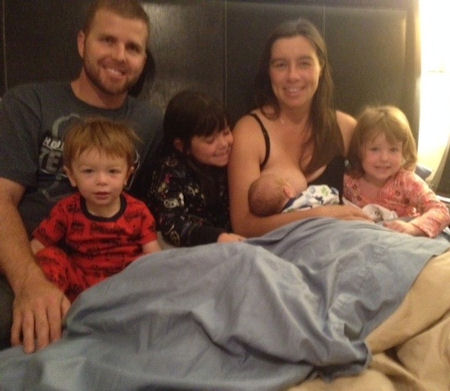
Moments after giving birth!..Happy, happy parents! There's no place like home!  April, 2013


Welcome to Midwife & Doula Services
I am an independent Certified Nurse Midwife (CNM) with a small, intimate childbirth service. My service is dedicated to offering quality prenatal care, birth and postnatal follow-up care to women and families in the greater Des Moines, Iowa community. I specialize in very personalized relationship building-- and optimal, not adequate care--during this special time of life.


Sylvie | A Birth Story

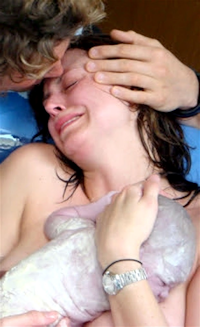
So one day I had this wild idea that I wanted to try my hand at birth photography. Luckily Every one I know is expecting...including one of my dearest friends.  I finally got up the courage to ask her if she'd mind bearing all, and allowing me to photograph.  To my surprise she agreed, without thinking I was a creeper! 

Fast forward to Saturday night, around 9pm I get a message that she's been having contractions and this could be it.  So I tried to do the smart thing and lay down and rest.  Around 11:15pm I sleep through the text telling me to come...but wake up not too long after and make my way over.  Here begins the journey of what the next 12 hours would hold.  I do hope these photos help to capture even a glimpse at how incredible the miracle of birth is, how good our God is, and help us to embrace every moment!


Please enjoy a recent photo journal of 'Sylvie's Birth" at home!
Photographed by Stephanie Doll Click here to view the photos.


Laughing Gas Bringing Smiles to More Women in Labor
By Crystal Phend, Senior Staff Writer, MedPage Today
Published: April 27, 2011


Rapid contractions left Anna Jaeger desperate for something more than the distraction of the jacuzzi during her slowly progressing labor with her first child.


Hoping to retain some sensation and avoid an epidural, she turned to an analgesic option available to few U.S. women -- nitrous oxide, better known as laughing gas.


"It was wonderful," she said, chuckling as she recalled the relief it brought. "I told the anesthesiologist I loved her, it helped that much."


That's a pretty typical response, according to nurse midwife Judith Bishop, CNM, MPH, who assisted with the delivery at the University of California San Francisco Medical Center.


UCSF is one of only three centers in the country that offer nitrous oxide during labor and delivery. But that may be changing as a grassroots movement driven by nurse midwives pushes to give women an intermediate option short of an epidural.


Pain Relief That's 'Good Enough'


Obstetric analgesia has a limited range concentrated at the two extremes: nonmedical tools like massage and hot tubs that make women more comfortable and epidural infusions that block all feeling below the administration site.


Opioid painkillers are also available but typically don't do much for labor pain, noted Suzanne Serat, CNM, MSN, a nurse midwife at Dartmouth-Hitchcock Medical Center in Lebanon, N.H.


"In studies that look at how much pain relief there is from different tools, tubs rate higher than narcotics," she explained in an interview with MedPage Today.


Nitrous oxide may bridge that gap with modest pain relief.


"[Women] won't say it makes a tremendous dent in their pain," Bishop told MedPage Today, "but it often provides enough distance and relief for the quintessential response 'It still hurts but I don't care.'"


Specialized equipment fixes the oxygen-to-nitrous oxide ratio at 50/50, and the woman holds the mask in her hand, controlling when and how much anesthetic she gets.


These measures ensure that the gas never becomes anesthesia, as it does when used in the operating room or dental office, and eliminates concerns about oxygenation for mother and baby, Bishop noted.


Because the body doesn't metabolize nitrous oxide, its quick-on, quick-off effect makes it a flexible tool in the delivery room, added Serat, who is part of a team evaluating its potential use at Dartmouth.


Women can get up to go to the bathroom, for example, whereas an epidural tethers them to the bed, she noted.


Nitrous oxide also provides a quick option for women progressing too rapidly through labor to get an anesthesiologist in to administer an epidural or for those who are planning a "natural" unmedicated birth but who hit a rough patch and need some relief, Bishop pointed out.


Nitrous oxide may hold the most promise for free-standing birthing centers or those that don't have an anesthesiologist available 24-7, noted Craig M. Palmer, MD, of the University of Arizona in Tucson and chair of the obstetric anesthesia committee for the American Society of Anesthesiology.


Push for Nitrous Oxide Starts Small


For all these reasons, nitrous oxide has been gaining a following among nurse midwives, and the burgeoning interest has no greater cheerleader than Judith Rooks, CNM, MS, MPH, the former head of the American College of Nurse Midwives and professor emeritus at Oregon Health & Science University in Portland.


"It was so striking to me that women in other countries had this choice and women in the U.S. didn't," she told MedPage Today.


In fact, the majority of women laboring in England and Scandinavian countries use nitrous oxide and it's used in about one in five deliveries in Canada. But the gas never really caught on for labor analgesia in the U.S., with epidurals taking over instead, Rooks explained.


She started writing articles about the use of nitrous oxide in midwifery journals in 2007; they drew considerable interest and an Internet list serve resulted.


"I want to expand access," Rooks told MedPage Today. "If epidurals weren't available I would want to expand access to them. I believe women should have a choice. I focused on nitrous oxide because it's missing from what's available to women in the U.S."


And that is a message that resonates with midwives and pregnant women alike.


"The resurgence is being driven by midwives," Serat said. "We spend lots of time with women in labor. Lots of time. ... It's just nice to have as many tools as you can possibly have."


Consumer interest is likely to drive the rest of the progress, once hospitals see nitrous oxide as a factor that can give them an edge in attracting deliveries to their center, Bishop noted.


That's been the case at Vanderbilt University Medical Center, noted obstetric anesthesiologist Sarah Starr, whose center, in Nashville, Tenn., has purchased the equipment and is on the threshold of becoming the fourth to offer nitrous oxide for labor.


"In our department there was an initial thought of why would anybody want anything other than an epidural because an epidural obviously provides superior pain relief," Starr told MedPage Today. But "we have a very great patient interest in it. Women are very interested in having different options."


Not Competition, Just an Option


Nitrous oxide is no replacement for epidurals, Palmer cautioned in an interview supervised by ASA public relations staff.


"It's just not that great a pain reliever," he told MedPage Today. "Even in places that embrace it I think a lot of patients would say 'It's not working that well, now I'll have the epidural.'"


Other factors can come into play as well. In Anna Jaeger's case, for instance, she had to switch to an epidural to stop her premature pushing response that threatened to lead to a C-section.


"It's not one size fits all," Bishop said. "More choices is a good idea."


Labor pain differs from the sort managed in other areas of medicine, noted Bishop, who has become one of the nation's go-to experts on the subject because of the scarcity of obstetric experience with nitrous oxide here.


Women in labor know the pain is normal and going to come to an end, and not all of them want to lose all sensation of the birth, she explained.


"This is not throwing them scraps," Rooks argued. "Not everybody wants the same thing."


Rather than being a turf issue, obstetric anesthesiologists and nurse midwives have a common goal, according to Starr.


"We want to provide the safest and best care for all our patients," she said. "As an anesthesiologist, it has more to do with really coming to grips with the fact that just because something provides complete pain relief doesn't mean it's the best option for all women."


What's Stopping Acceptance


One major factor curtailing the fledgling field's momentum is the lack of infrastructure, noted Palmer.


"Most facilities simply aren't prepared to offer nitrous oxide for labor analgesia," he said.


The FDA has not approved the premixed oxygen and nitrous oxide tanks that are used in other countries, and the manufacturer of the fixed-ratio equipment used to mix the separate gases stopped production because of a lack of sales.


"Unfortunately Judith Rooks started this whole effort right at the time, unbenownst to all of us, that the company that made the only equipment for this purpose decided to stop making it," Bishop explained. "So we've had a big disconnect between interest and ability to institute it due to lack of equipment."


Starr's group at Vanderbilt had to resort to the secondary market for pre-owned machines.


That limitation may change any time now, though, according to Evan McAllister, CRT, whose company Nitrogesia in Double Oak, Texas, is awaiting the all clear from the FDA to put their nitrous oxide equipment on the market.


McAllister predicted that, in the most optimistic scenario, the gas-blending equipment could be ready for the waiting list of universities and other centers in a little as a month.


Another possible hang-up is concern over safety.


There's been no investigation into the effects of in utero exposure to nitrous oxide, and nitrous oxide exposure to allied health professionals often exceeds federal occupational safety limits, Palmer cautioned.


Those levels were set arbitrarily based on weak data from operating rooms in the 1970s, and prior studies that suggested a possible effect on time to get pregnant, Serat argued.


The professional exposure concerns can be addressed by use of masks that scavenge the nitrous oxide and periodically having nurses wear badges to monitor exposure, Bishop suggested.


But because even the efficacy data for pain relief with nitrous oxide is uniformly old, Starr said her group plans to study these issues once clinical use gets under way at Vanderbilt.


Dartmouth may wait to make its final decision on instituting nitrous oxide during labor until they see Vanderbilt's data and have more safety assurance in hand, Serat noted.


But that would be a mistake, Rooks argued, noting it will be years before that data comes in, whereas the European experience shows millions of women having used it without any evidence of problems.


"Just because people have been using it doesn't mean we know enough about its safety," Palmer countered.


It took a long time for epidurals to be accepted as safe, too, noted Rooks.


"Like anything it will come slowly," she predicted.


But grassroots acceptance is being helped along by women like Jaeger, who has been spreading the word among her pregnant friends.


"I think it's crazy that more hospitals don't use nitrous," she said.


This article was developed in collaboration with ABC News.

Maternity Care with a Heart


Maternity Care With a Heart from Childbirth Connection on Vimeo.


Celebs, Ordinary Women Embracing Home Birth With Help of Midwives

Video plays after a very brief commercial.


video platformvideo managementvideo solutionsvideo player


Birth by the Numbers


One World Birth is a unique FREE video website about the latest issues in birth from around the world.


"Dr. Justin Case" - a video from BirthSense.com, A Common Sense Guide to Normal Birth


Short Film on Dutch Maternity Care:


A compelling article about homebirth can be found on Babble.com by Jennifer Block. Birth Wars: Who's really winning the homebirth debate?


The Baby Project

Read the article, and watch the video of Shannon Earle's story of having a baby at home with a midwife, "Birth: In The Comfort Of Home"


Study Finds Home Births Increase by 20 Percent: Read the full article here.


The Most Scientific Birth Is Often the Least Technological Birth

By Alice Dreger

If you look at scientific literature, you find over and over again that many interventions increase risk to mother and child instead of decreasing it.

Kenishirotie/Shutterstock

When I ask my medical students to describe their image of a woman who elects to birth with a midwife rather than with an obstetrician, they generally describe a woman who wears long cotton skirts, braids her hair, eats only organic vegan food, does yoga, and maybe drives a VW microbus. What they don't envision is the omnivorous, pants-wearing science geek standing before them.

Indeed, they become downright confused when I go on to explain that there was really only one reason why my mate -- an academic internist -- and I decided to ditch our obstetrician and move to a midwife: Our midwife could be trusted to be scientific, whereas our obstetrician could not.

Many medical students, like most American patients, confuse science and technology. They think that what it means to be a scientific doctor is to bring to bear the maximum amount of technology on any given patient. And this makes them dangerous. In fact, if you look at scientific studies of birth, you find over and over again that many technological interventions increase risk to the mother and child rather than decreasing it.

But most birthing women don't seem to know this, even if their obstetricians do. Paradoxically, these women seem to want the same thing I wanted: a safe outcome for mother and child. But no one seems to tell them what the data indicate is the best way to get there. The friend who dares to offer half a glass of wine is seen as guilty of reckless endangerment, whereas the obstetrician offering unnecessary and risky procedures is considered heroic.

Ethicists talk about birthing choices as if they are informed and autonomous, but I can't count how many women have said to me they "chose" pain meds during birth even though they were never told the risks.

When I was pregnant, in 2000, and my mate and I consulted the scientific medical literature to find out how to maximize safety for me and our child, here's what we learned from the studies available: I should walk a lot during my pregnancy, and also walk around during my labor; doing so would decrease labor time and pain. During pregnancy, I should get regular check-ups of my weight, urine, blood pressure, and belly growth, but should avoid vaginal exams. I should not bother with a prenatal sonogram if my pregnancy continued to be low-risk, because doing so would be extremely unlikely to improve my or my baby's health, and could well result in further tests that increased risk to us without benefit.

According to the best studies available, when it came time to birth at the end of my low-risk pregnancy, I should not have induction, nor an episiotomy, nor continuous monitoring of the baby's heartbeat during labor, nor pain medications, and definitely not a c-section. I should give birth in the squatting position, and I should have a doula -- a professional labor support person to talk to me throughout the birth. (Studies show that doulas are astonishingly effective at lowering risk, so good that one obstetrician has quipped that if doulas were a drug, it would be illegal not to give one to every pregnant woman.)

In other words, if the regular low-tech tests kept indicating I was having a medically uninteresting pregnancy, and if I wanted to scientifically maximize safety, I should give birth pretty much like my great-grandmothers would have: with the attention of a couple of experienced women mostly waiting it out, while I did the work. (They called it labor for a reason.) The only real notable difference was that my midwife would intermittently use a fetal heart monitor -- just every now and then -- to make sure the baby was doing okay.

My obstetrician and his practice had made clear that they were rather uncomfortable with this kind of "old-fashioned" birth. So we left, and engaged a midwife who was committed to being much more modern. And the birth I had was pretty much as I have described. Yes, it hurt, but my doula and midwife had prepared me mentally for that, assuring me that this kind of special pain did not have to result in fear or harm.

We did end up with one technological intervention: because my son had meconium in his fluid (this means he'd defecated in the womb), the midwife explained to me that right after birth, the pediatricians would be scooping him up to suck out his trachea (his windpipe). The idea was to prevent pneumonia. They did this, and three months later over breakfast my husband presented me the results of a randomized control trial that had just come out: it showed that babies in this situation who only had their mouths and not their tracheas cleaned actually had lower rates of pneumonia compared to those who got the tracheal intervention. Another intervention that turned out not to be worth it.

So why is it that, over a decade later, when the evidence still supports a low-interventionist type of pregnancy and birth management for low-risk cases, we've made virtually no inroads to making birth more scientific in the United States.

I put that question to a few scholars who work on this issue. One of them, Libby Bogdan-Lovis of the Center for Ethics and Humanities in the Life Sciences at Michigan State University, happens also to have been my doula. (Lucky me.) Libby noted that a big part of the problem is the way birth is conceived in America -- as "dangerous, risky, and in need of control to ensure a good outcome."

Libby pointed out that institutional strictures contribute to the problem: "Insurance companies generally cover hospital birth, not home birth, they are more inclined to compensate doctors over midwives, they compensate doctors and hospital-based midwives for doing something over doing nothing, and the health care system's risk management approach backs those who can demonstrate that they did everything possible in terms of intervention." All this in spite of the fact that, as Libby notes, "attempts to control birth are fraught with real medicalized risk and commonly lead to cascades of interventions."

vlavetal/Shutterstock

Raymond De Vries, a sociologist in the University of Michigan's Center for Bioethics and Social Science in Medicine, has compared birth in the U.S. to that in the Netherlands, where he is a visiting professor at the University of Maastricht. He finds that, in the U.S., "obstetricians are the experts and the experts have come to see birth as dangerous and frightening." De Vries suggests that the organization of maternity care in this country -- "the limited choices that American women have for bringing their baby into the world, what women are not told about dangers of intervening in birth, and the misuse of science to support the new technologies of birth" -- actually constitutes an ethical problem, although we typically do not recognize it as one. Medical ethicists "would rather look to the [comparatively rare] problems of in vitro fertilization and preimplantation genetic diagnosis than to the every day issues ofhow we organize birth here in the U.S.; they would rather talk about preserving women's 'choices' than to explore how those choices are bent by culture."

So true. Ethicists love to talk about women's birthing choices as if they are informed and autonomous, but I can't count how many women have said to me that they "chose" pain medication during birth even though they were never told the risks of pain medication, never had anyone express confidence in them that they could birth without medication, and were never offered a doula to walk and talk them through the pain. What kind of "choice" is that? As Libby Bogdan-Lovis told me, "Today's average childbearing woman thinks the notion of an unmedicated birth is the equivalent of suggesting that women should eagerly embrace torture."

If I wanted to maximize safety, I should give birth like my grandmothers would have: with the attention of a couple of experienced women mostly waiting it out, while I did the work.

I think of all the choices I made, the one that shocked my peers most was not getting a prenatal ultrasound. But just a few years before I became pregnant, a major U.S. study -- involving over 15,000 pregnancies -- published in the New England Journal of Medicine showed that routine ultrasounds did not leave babies safer. That work was led by Bernard Ewigman, now chair of family medicine at the University of Chicago and NorthShore University Health System.

I recently called Dr. Ewigman and asked him why so many low-risk pregnancies now involve routine ultrasounds. He suggested that it was partly emotional -- people like to "see" their babies -- and partly due to the unsubstantiated belief that knowing something is necessarily going to lead to better outcomes than not knowing. But, he agreed, routine prenatal sonograms in low-risk pregnancies (that is, pregnancies in which there have been no problems) do not appear to be supported by science, if the outcome you're seeking is reducing illness and death in mothers and children. Routine prenatal sonograms don't seem to be dangerous, but they are also not health-giving.

Dr. Ewigman told me, "The approach you took to your pregnancy was rational and well informed. But most decision-making when it comes to medical issues involving a pregnant woman or baby are not well informed and not based on rational thinking." He added: "We're all very interested in having healthy babies and it is pretty easy to make the kind of cognitive errors that people make, and attribute to technology benefits that don't exist. At the same time, when there are problems in a pregnancy, that very same technology can be life-saving. It is easy to make the [problematic mental] leap that technology is always going to be necessary for a good outcome."

Dr. Ewigman and I talked about how some people derive false certainty from prenatal sonograms, thinking that if the clinicians see nothing unusual, the baby will be born perfectly healthy. I explained to him that that was one reason I didn't bother; I knew from my own research on birth anomalies how often sonograms mislead. He observed that our culture has "a real fascination with technology, and we also have a strong desire to deny death. And the technological aspects of medicine really market well to that kind of culture." Whereas a low-interventionist approach to medical care -- no matter how scientific -- does not.

I'm not against taking into account, when making birthing choices, the kinds of hard-to-measure outcomes that may matter deeply to some pregnant women. I get that there are some women who don't want a baby shower like mine, where most of the gifts consist of yellow and green baby clothes, instead of pink or blue. I get that some want to have those fuzzy pictures of the babies in their wombs. I get that some might want to abort if a sonogram were to show a major anomaly.

And I get that some women want a particular experience of birth -- I mean, I really get that now that I have had a birth that left me feeling more powerful, more humble, more focused, and more devoted to my lover than I ever thought I could feel.

But I wish American women were told the truth about birth -- the truth about their bodies, their abilities, and the dangers of technology. Mostly I wish all pregnant women could hear what Libby Bogdan-Lovis, my doula, told me: "Birthing a baby requires the same relinquishing of control as does sex -- abandoning oneself to the overwhelming sensation and doing so in a protective and supportive environment." If only more women knew how sexy a scientific birth can be.

This article available online at:

http://www.theatlantic.com/health/archive/2012/03/the-most-scientific-birth-is-often-the-least-technological-birth/254420/


Links & Downloads
 

"There's no place like Home!"


After attending births at Iowa Methodist Medical Center for many years, Dana has returned to her roots - attending Out of Hospital births for healthy, low-risk women. Providing well-woman care to women of all ages continues. Contact Dana to arrange a consultation visit at no cost!


"The parallels between making love and giving birth are clear, not only in terms of passion and love, but also because we need essentially the same conditions for both experiences: privacy and safety."


-Sarah Buckley, MD


Find us on Facebook!


American College of Nurse-Midwives


"The most important period of your child's health is the nine months before birth! Cutting-edge research in a new field known as metabolic programming reveals a startling new fact:  What a mother eats during pregnancy has a far greater effect on her child's future development, overall health, and resistance to disease than was previously thought.  In fact, adult chronic illnesses long blamed on an unhealthy lifestyle or genetic influences are now believed to be a direct result of the uterine environment during pregnancy."  

-Barbara Luke, PhD, Programming Your Baby's Health:  The Diet for your Child's Life Long Well-being.


CNMs receive similar or better grades on cesarean section, low APGAR score, episiotomy, labor analgesia, and perineal lacerations.